
They Weren't There for the Music (And That Made It Better)
I stood at a Steinway grand piano in the Lips Atrium at Mayo Clinic in Rochester — one of the busiest crossroads in one of the most renowned medical facilities in the world — and sang jazz standards for people who didn't plan on hearing them.
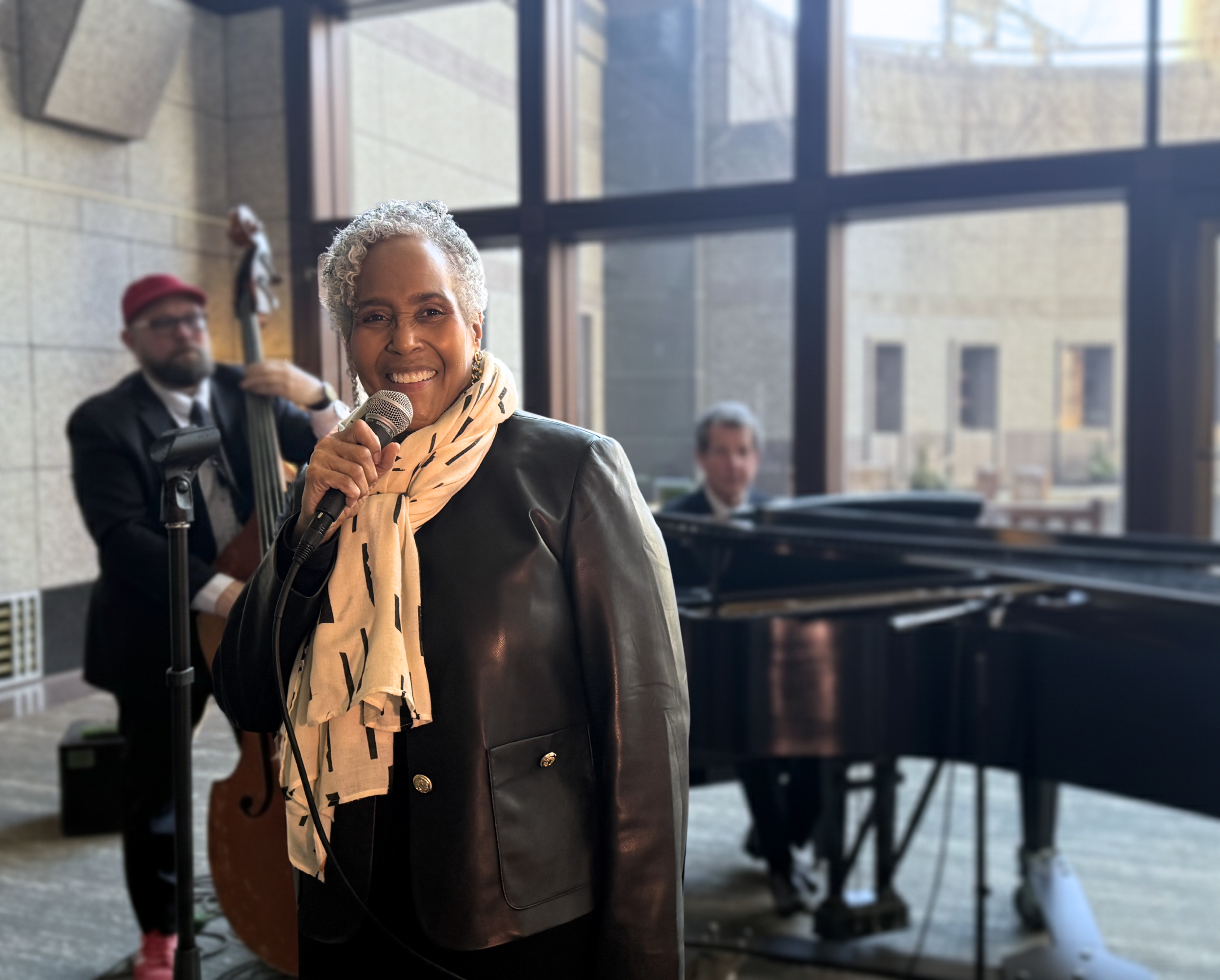
Mondays at noon, the Rosemary and Meredith Willson Harmony for Mayo series brings live music into that high-ceilinged atrium, and has been doing so for 27 years. People flow in and out — a doctor grabbing a quick break, a family waiting for news they didn't ask for, a patient who just came from an appointment that changed everything. Nobody bought a ticket. Nobody made a plan.
They just found themselves standing in the middle of something they didn't know they needed.
The series was funded by Rosemary Willson in memory of her husband Meredith — yes, that Meredith Willson, the man who wrote The Music Man. I'm from Gary, Indiana. You can probably guess how often someone breaks into song the moment I mention that. The gift was made in gratitude for their care at Mayo, and nearly three decades later, it's still giving.
We were a trio that afternoon — piano, bass, and me — bringing jazz and American Songbook standards into a series that tends to lean toward folk and singer-songwriter genres. I don't know if that contrast had something to do with it, but people lit up. Our contact mentioned it afterward — how many people were singing along under their breath, or had a little extra lift in their step as they passed through, almost dancing without quite committing to it. Thumbs up from strangers. People pausing mid-errand just to let a chorus wash over them.
And I think about what everyone in that room is being asked to do.
To be patient. To be brave. To absorb information they didn't want and make decisions they weren't ready for. And they rise to it because walking away isn't possible.
On a day full of life-altering conversations and next steps, music offers a reprieve.
There's nothing to schedule, nothing to decide, no right way to receive it. You can just let it wash over you while you stand in a lobby holding a cup of coffee, nursing your baby, or eating lunch, and for a few minutes, that's enough.
In a place like Mayo, where so much is uncertain and the present moment can feel like too much to carry, that gift is no small thing. For a few minutes, you're not in a hospital atrium. You're somewhere else entirely. And then you come back — but maybe a little lighter than before.
After we finished, a woman came up and told me she'd been at Mayo all week with her husband. Hearing "their song," she said, felt like being handed a few minutes of normal. I didn't have words for that in the moment, and honestly I'm not sure I do now. What I know is that it mattered — and that mattering felt different than most nights on a stage.
There's a reason certain songs stay with us for a lifetime. A familiar melody can loosen something in the chest that nothing else reaches. For one woman, it was a few minutes of normal. For a caregiver leaning against a pillar on her lunch break, maybe it was permission to stop for just a moment. For a patient in transit between appointments, maybe it was a reminder that the world still contains beautiful things.